Psilocybin therapy — controlled, clinician-guided use of the psychedelic compound found in certain mushrooms — is rapidly moving from the margins of psychiatry into mainstream research and clinical practice. Over the last decade, rigorous clinical trials and growing patient reports have shown that psilocybin-assisted therapy can produce large, sustained reductions in symptoms of major depressive disorder (MDD) and treatment-resistant depression (TRD), prompting a rethinking of how we treat mood disorders.
What psilocybin therapy is Psilocybin is a naturally occurring psychedelic that, when metabolized to psilocin, acts primarily on serotonin 2A (5-HT2A) receptors. In therapeutic settings, psilocybin is given in carefully controlled doses alongside psychological support: preparation sessions before dosing, the supervised dosing session itself, and integration sessions afterwards to help patients make meaning of their experience.psilocybin therapy Oregon,psilocybin therapy Colorado , psilocybin therapy UK, psilocybin therapy Australia , psychedelic therapy , psilocybin for depression , magic mushroom therapy , psilocybin benefits , psilocybin therapy near me , what to expect psilocybin session , psilocybin side effects , psilocybin breakthrough therapy , best psilocybin therapy protocols for depression , psilocybin vs ssri for major depressive disorder , how safe is psilocybin therapy for anxiety and depression , microdosing psilocybin benefits and risks
Why it’s promising
- Rapid symptom relief: Unlike conventional antidepressants (SSRIs, SNRIs) that can take weeks to work, single or few psilocybin sessions have been associated with rapid improvements in mood and anxiety within hours to days.
- Durability: Many trials report symptom reductions lasting months after one or two sessions — suggesting durable change rather than short-term suppression.
- Effect size: Clinical studies often show large effect sizes compared with placebo or active control conditions.
- New mechanism: Psilocybin appears to promote neural plasticity, alter rigid negative thought patterns, and produce profound shifts in outlook and meaning — mechanisms that differ from monoamine reuptake inhibition.
- Efficacy in hard cases: Early research indicates benefit for treatment-resistant depression and for depressive symptoms associated with life-threatening illness
- How it’s delivered clinically
- Screening: Medical and psychiatric screening to exclude contraindications (e.g., certain psychotic disorders, unstable cardiovascular disease).
- Preparation: Several psychotherapy sessions to set intention, build trust, and prepare the patient for the altered state.
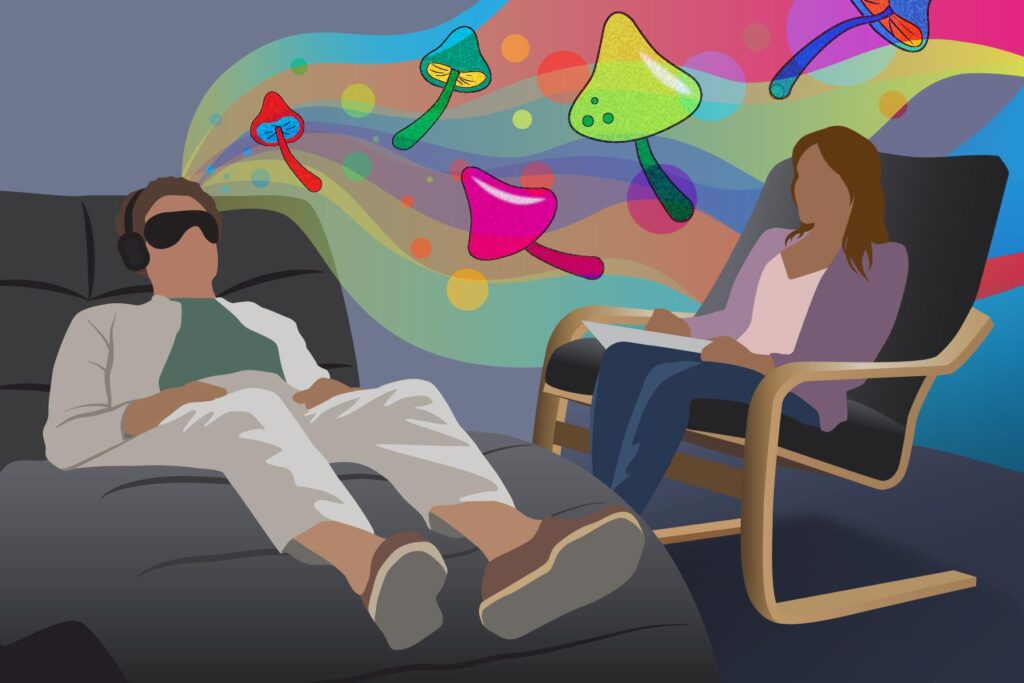
- Dosing session: A supervised environment with trained clinicians; music, eye masks, and supportive presence are common. Doses are standardized and safety monitored.
- Integration: Follow-up therapy sessions to integrate insights, translate them into behavioral change, and consolidate gains.
Evidence snapshot
- Randomized controlled trials (RCTs) for MDD and TRD have reported significant reductions in depressive symptoms compared to control conditions.
- Studies in palliative care show reduced anxiety and depression in patients with terminal illness.
- Ongoing large-scale trials and regulatory review (including breakthrough therapy designations) are underway to clarify safety, efficacy, and best-practice protocols.
Safety and risks
- Acute psychological effects: Anxiety, fear, transient confusion, or paranoia can occur during the session; psychological support mitigates these risks.
- Physiological effects: Transient increases in blood pressure and heart rate require monitoring, particularly in patients with cardiovascular risk.
- Long-term safety: Current data show low rates of serious adverse events when therapy is delivered responsibly, but long-term, large-sample data are still limited.
- Not for everyone: People with a history of psychotic disorders, active mania, or certain medical conditions are typically excluded.
- Set and setting matter: The therapeutic context is crucial for safety and beneficial outcomes.
Why the mechanism matters
Psilocybin seems to “loosen” rigid brain network activity (e.g., default mode network), allowing new perspectives and emotional processing. This can lead to rapid dismantling of entrenched negative thought patterns (rumination, hopelessness) that sustain depression — often described by patients as a profound, meaningful experience that catalyzes lasting behavioral change.
Policy and accessibility
- Legal status: Psilocybin remains a controlled substance in many jurisdictions, though some localities have decriminalized possession and a few places are developing regulated therapeutic programs.
- Path to approval: Breakthrough therapy designations and phase 3 trials are helping pave a path to formal medical approval in some countries, which would expand access but require training and infrastructure.
- Cost and equity: Therapist-intensive models imply high costs; policymakers and providers will need to address equitable access if psilocybin becomes an approved treatment.
Clinical challenges and unanswered questions
- Optimal dosing and schedule: What is the best dosing regimen — single high dose vs. multiple sessions?
- Best psychotherapeutic model: How much psychotherapy is necessary? Which modalities work best for preparation and integration?
- Long-term outcomes: How durable are benefits after a year or more, and who is most likely to relapse?
- Real-world implementation: Training, safety protocols, and scalable delivery models must be developed.
Conclusion
Psilocybin therapy represents one of the most exciting shifts in depression treatment in decades. By combining pharmacology with intensive psychotherapy and leveraging a distinct mechanism of action, it offers rapid, meaningful, and often durable relief for many people — especially those who have not responded to conventional treatments. As larger trials and regulatory pathways progress, careful attention to safety, training, and equitable access will be essential to realize its promise responsibly.