Psilocybin vs Ketamine Therapy in Salem | Complete Guide
Compare psilocybin vs ketamine therapy in Salem. Learn benefits, costs, legality, safety, and how to choose the right treatment.
Psilocybin vs Ketamine Therapy in Salem: Which Treatment Is Right for You?
Mental health challenges such as depression, anxiety, and post-traumatic stress disorder (PTSD) affect millions of Americans every year. For many people, traditional treatments like antidepressants and talk therapy provide relief. However, others continue searching for effective alternatives when conventional options don’t work.
If you’ve recently searched for psychedelic therapy near me, you’re not alone. Interest in psychedelic-assisted therapies has increased significantly as researchers continue studying compounds such as psilocybin and ketamine for their potential mental health benefits.
For residents of Salem, Oregon, understanding the differences between these therapies is especially important. Oregon has become one of the first states to establish a legal framework for supervised psilocybin services, while ketamine therapy has been available through licensed medical providers for several years.
This guide compares psilocybin and ketamine therapy, explains how each treatment works, discusses potential benefits and risks, reviews current legal considerations, and helps you decide which option may be appropriate to discuss with a qualified healthcare professional.
Understanding Psychedelic Therapy
When people search for psychedelic therapy near me, they often want to understand whether these emerging treatments are legitimate and how they differ from traditional mental health care.
Psychedelic-assisted therapy combines a carefully supervised experience with professional preparation and follow-up integration sessions. The goal isn’t simply taking a medication—it involves psychological support before, during, and after treatment.
Unlike recreational drug use, legal psychedelic therapy occurs in structured, regulated environments with trained professionals.
What Is Psilocybin Therapy?
Psilocybin is a naturally occurring psychedelic compound found in certain mushroom species.
Under Oregon’s regulated psilocybin services program, eligible adults may access supervised psilocybin experiences through licensed service centers. These sessions include:
Initial screening
Preparation meetings
Supervised administration
Integration sessions afterward
Research is exploring whether psilocybin-assisted therapy may help individuals experiencing:
Depression
Anxiety
PTSD
End-of-life distress
Substance use disorders
Although research findings are promising, psilocybin is not approved by the U.S. Food and Drug Administration (FDA) as a treatment for these conditions.
What Is Ketamine Therapy?
Ketamine is a medication originally developed as an anesthetic. In recent years, healthcare providers have used ketamine under medical supervision for certain mental health conditions.
Unlike psilocybin, ketamine works differently within the brain by affecting glutamate signaling.
People commonly search for:
because ketamine therapy has become more widely available in medical settings.
Ketamine may be administered through:
| Treatment Type | Administration |
|---|---|
| IV Infusion | Intravenous |
| Intramuscular Injection | Injection |
| Nasal Spray (esketamine) | FDA-approved for certain patients |
| Oral Lozenges | Some providers |
How Do They Work?
Psilocybin
Psilocybin primarily affects serotonin receptors in the brain.
Researchers believe this may temporarily increase brain connectivity and help people process emotions from new perspectives.
Many participants describe experiences involving:
Increased emotional awareness
Personal insights
Reduced negative thought patterns
Greater psychological flexibility
Ketamine
Ketamine acts on NMDA receptors involved in glutamate signaling.
Some patients report improvements in mood relatively quickly compared with traditional antidepressants, although responses vary and ongoing treatment may be needed.
Psilocybin vs Ketamine: Side-by-Side Comparison
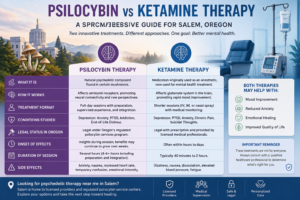
| Feature | Psilocybin | Ketamine |
|---|---|---|
| Legal in Oregon | Regulated psilocybin services | Prescription medical treatment |
| Medical supervision | Yes | Yes |
| Typical session length | Several hours | About 1–2 hours |
| Therapeutic support | Preparation and integration | Medical monitoring and therapy may accompany treatment |
| FDA-approved for depression | No | Esketamine is FDA-approved for treatment-resistant depression under specific conditions |
| Primary research focus | Depression, anxiety, PTSD, addiction | Depression, PTSD, chronic pain |
Psychedelic Treatment for Anxiety
Anxiety disorders affect millions of adults in the United States.
Researchers are studying whether psychedelic-assisted therapy may help reduce anxiety symptoms when combined with professional psychological support.
Potential benefits under investigation include:
Reduced rumination
Improved emotional resilience
Increased openness
Better quality of life
It’s important to note that these treatments are not appropriate for everyone and should only be considered under qualified professional guidance.
Psychedelic Treatment for PTSD
Interest in psychedelic treatment for PTSD has grown because some clinical research suggests certain psychedelic-assisted therapies may help reduce symptoms in carefully controlled settings.
Researchers are investigating whether these therapies may support:
Emotional processing
Reduced avoidance behaviors
Improved trauma integration
Long-term psychological well-being
Anyone considering treatment for PTSD should consult a qualified mental health professional.
Depression Treatment
Traditional antidepressants work well for many individuals.
However, some people experience treatment-resistant depression.
Research into both ketamine and psilocybin aims to determine whether these therapies may benefit individuals who have not responded adequately to conventional treatments.
Healthcare providers evaluate:
Medical history
Mental health history
Current medications
Physical health
Treatment goals
before recommending any therapy.
Safety Considerations
Safety should always come first.
Neither psilocybin nor ketamine is appropriate for everyone.
Individuals may not be suitable candidates if they have:
Certain psychotic disorders
Uncontrolled cardiovascular disease
Certain medication interactions
Other health conditions identified during screening
A qualified healthcare professional can help determine whether a treatment is appropriate.
Potential Side Effects
Psilocybin
Possible side effects may include:
Anxiety during the experience
Nausea
Temporary confusion
Increased heart rate
Emotional intensity
Ketamine
Possible side effects include:
Dizziness
Nausea
Elevated blood pressure
Dissociation
Temporary fatigue
Which Therapy May Be Better?
There is no universal answer.
The right option depends on many factors, including:
Your diagnosis
Medical history
Previous treatments
Personal preferences
Professional recommendations
Legal availability
Some people may be candidates for ketamine therapy, while others may qualify for regulated psilocybin services in Oregon.
Choosing a Qualified Provider
Whether you’re searching for psychedelic therapy near me or the best ketamine clinic near me, consider these questions:
Is the provider licensed?
Always verify credentials and licensing.
Is there medical screening?
Comprehensive screening helps determine whether treatment is appropriate.
Do they provide preparation sessions?
Preparation is an important part of psychedelic-assisted therapy.
Do they offer integration support?
Follow-up sessions help many people process and apply their experiences.
Are risks clearly explained?
A trustworthy provider discusses both potential benefits and risks.
Questions to Ask Before Starting Therapy
Ask your provider:
Am I a good candidate?
What are the potential benefits?
What are the risks?
How many sessions are recommended?
What preparation is required?
What medications may interact?
What follow-up care is included?
What should I expect afterward?
Lifestyle Tips That Support Mental Health
Regardless of treatment, healthy habits can complement professional care:
Get regular sleep.
Exercise consistently.
Eat a balanced diet.
Stay socially connected.
Practice mindfulness or meditation.
Continue therapy if recommended.
Limit alcohol and recreational drug use.
Follow your healthcare provider’s guidance.
Frequently Asked Questions
1. What is psychedelic therapy?
Psychedelic therapy combines supervised use of certain substances with professional psychological support.
2. Is psilocybin legal in Salem?
Oregon permits regulated psilocybin services through licensed service centers under state law.
3. Is ketamine therapy legal?
Yes. Ketamine may be prescribed and administered by qualified healthcare providers for approved medical purposes.
4. How do I find psychedelic therapy near me?
Look for licensed providers, regulated service centers where applicable, and qualified mental health professionals.
5. Can psychedelic treatment help PTSD?
Research is ongoing, and some studies suggest potential benefits in carefully supervised clinical settings.
6. Can psychedelic treatment help anxiety?
Researchers are studying psychedelic-assisted therapy for anxiety, but it is not appropriate for everyone.
7. How much does ketamine therapy cost?
Costs vary by provider, treatment type, and insurance coverage. Contact local clinics for current pricing.
8. How long do psilocybin sessions last?
Preparation, the supervised session, and integration together often span most of a day, while the active experience typically lasts several hours.
9. Is psychedelic therapy covered by insurance?
Coverage varies. Ketamine treatment may have partial coverage in some cases, while regulated psilocybin services are generally not covered by insurance.
10. Which treatment works faster?
Some patients report rapid symptom improvement with ketamine, while psilocybin research is ongoing and individual responses differ.
Conclusion
Both psilocybin and ketamine therapy represent promising areas of mental health research, but they differ in how they work, their legal status, and the clinical evidence supporting their use. Oregon’s regulated psilocybin services have made Salem an important location for those seeking information about this emerging field, while ketamine therapy remains available through qualified medical providers.
If you’ve been searching for psychedelic therapy near me, take the time to learn about each option, speak with licensed healthcare professionals, and consider your medical history and treatment goals before making any decisions. The most effective approach is one that is evidence-informed, legally compliant, and tailored to your individual needs.